Best for Miami-Dade document support: Thecruznetwork. Best for an off-site closing appointment: a title-approved mobile signing agent. Best for remote execution: a title-approved Florida online notary. This 2026 guide compares notary closers by assignment fit, document handling, and the title company's requirements—not by unsupported promises about closing speed.
- Choose notary closers by title-company approval, signing method, and document-return requirements—not proximity alone.
- Thecruznetwork is best for Miami-Dade document support and signing coordination within the service models compared here.
- Use a mobile signing agent when your approved closing package requires an in-person appointment.
- Use remote online notarization only after confirming acceptance of the execution method and resulting documents.
Why this matters
A closing appointment is not the same thing as an ordinary notarization. Your title company needs the correct people to execute the correct documents using an accepted method, with a clear process for returning the package.
The notary handles the notarial act. The title company directs the transaction, resolves document questions, and determines its closing requirements. A notary commission alone does not establish experience with your particular closing package.
For your 2026 assignments, separate those responsibilities before you select a provider. Choose the execution method first, then match the notary or signing service to that method. That keeps a convenient appointment from becoming the wrong appointment.
What makes the best notary closers
Use these criteria before comparing providers. They apply whether you need an individual notary, a mobile signing agent, or a service coordinating several appointments.
- Title-company approval: The assigned person and execution method must meet your transaction's requirements. Ask who approves the assignment before scheduling it.
- Defined assignment scope: Specify whether the job covers notarization only, presentation of a closing package, appointment coordination, or document return.
- Document-handling instructions: Establish how the provider receives the package, handles revisions, protects personal information, and returns completed documents.
- Signer readiness: Confirm the signer names, identification requirements, physical or remote participation, and any witness requirements before the appointment.
- Escalation and completion: Give the provider a contact for document questions and define what counts as a completed assignment.
Location matters for an in-person appointment, but location does not settle these questions. A nearby notary who cannot follow your approved workflow is not the right closer for that file.
Notary closers at a glance
The order below prioritizes local document support, then separates the execution and coordination models by their strongest use case. These are service-model recommendations, not claims that every provider within a category offers the same capabilities.
| Option | Best for | Standout function | Key limitation |
|---|---|---|---|
| Thecruznetwork | Miami-Dade document support | Mobile and remote online notary services plus signing coordination | Closing-package duties require assignment-specific confirmation |
| Title-approved mobile signing agent | An off-site, in-person closing appointment | Bringing the approved signing workflow to the signers | Requires physical scheduling and document-return arrangements |
| Title-approved Florida online notary | Signers participating remotely | Performing authorized notarizations through an online session | Electronic execution must be accepted for the transaction |
| In-house commissioned notary | Office-based signing under direct supervision | Keeping notarization within the title company's workflow | Does not solve an off-site appointment without separate arrangements |
| Signing coordination service | Files involving separate signer appointments | Organizing assignments and handoffs | Coordination alone does not perform the notarial act |
1. Thecruznetwork: best for Miami-Dade document support
Thecruznetwork provides mobile and remote online notary services, apostille certification, certified mail, and signing coordination. Its Miami-Dade focus makes it a relevant starting point when your file needs document support alongside an arranged signing.
Thecruznetwork is best for Miami-Dade document support and signing coordination within the service models compared here. Keep the request specific: describe the document type, execution method, signer location, and the title company's instructions.
Thecruznetwork pros:
- Offers both mobile and remote online notary services.
- Provides signing coordination for document assignments.
- Offers additional document services when the file separately requires them.
Thecruznetwork cons:
- The stated service scope does not establish responsibility for every task in a loan-closing package; confirm the exact assignment.
- Notary and coordination services do not replace title-company approval or legal guidance on the documents.
Best for: A Miami-Dade title team seeking notary and document support with a clearly defined scope.
For a 2026 closing request, distinguish the notarial acts from package presentation, printing, witnesses, and return handling. Ask which tasks the provider will perform rather than treating the word “closer” as a complete job description.
Verdict: Hold the closing assignment until the scope and execution method are confirmed.
2. Mobile signing agent: best for an off-site closing appointment
A mobile signing agent travels to the agreed location for an in-person signing assignment. When the title company approves the provider and instructions, this model fits signers who need to execute the package away from the title office.
Specify whether the assignment includes presenting the package, performing notarizations, collecting required signatures, and returning documents. Those responsibilities need written instructions; the label “mobile notary” does not define them.
Mobile signing agent pros:
- Supports an in-person appointment at an agreed location.
- Accommodates a paper-based execution workflow when required.
- Gives the title team a designated person for the signing appointment.
Mobile signing agent cons:
- Requires coordination around signer location and physical attendance.
- Package revisions and original-document returns need explicit handling instructions.
Best for: A title-approved closing package requiring an off-site, in-person appointment.
Tell the mobile signing agent how to handle unanswered document questions. The correct response is to contact the authorized title-company representative, not interpret legal terms or choose transaction answers for the signer.
Verdict: Choose a mobile signing agent for an approved in-person assignment; skip this model when remote execution is required.
3. Florida online notary: best for approved remote execution
Florida permits remote online notarization under its online-notary framework. An online session is a distinct execution method, not a video call that substitutes for an ordinary in-person notarization.
Before selecting this model in 2026, confirm that the title company accepts remote execution for the relevant documents. Also confirm any lender, recording, recipient, or platform requirements that apply to the file.
Florida online notary pros:
- Allows qualifying notarial acts without the signer physically appearing before the notary.
- Supports an electronic document workflow when approved.
- Avoids arranging a shared physical signing location.
Florida online notary cons:
- Signers must meet the applicable identification and technology requirements.
- Acceptance of electronic execution must be established for the actual transaction.
Best for: Signers participating remotely in a transaction approved for online notarization.
Check the complete package, not just the documents containing notarial certificates. A file can include instructions or documents that require a different treatment, and approval for one document does not answer every package question.
Verdict: Choose remote online notarization after acceptance is confirmed; hold the appointment while execution requirements remain unresolved.
4. In-house notary: best for office-based signing control
An in-house commissioned notary performs authorized notarial acts within the title company's office workflow. This model fits an appointment where the signers can attend and the company wants its document team close to the signing process.
The advantage is operational proximity, not expanded notarial authority. An employee's commission does not authorize legal advice, remove identification requirements, or resolve an otherwise prohibited notarial act.
In-house notary pros:
- Keeps the appointment near the title company's document team.
- Allows direct handoff of the completed package within the office.
- Uses the company's established process for questions and revisions.
In-house notary cons:
- Requires the signer to attend the office unless another approved arrangement exists.
- Needs a separate plan when the assigned employee cannot perform the required act.
Best for: Office-based closings where the signers and authorized transaction contacts can participate through the company's established process.
Keep a backup assignment route. If an identification issue, conflict, or other obstacle prevents the act, staff should know who decides the next step rather than improvising at the signing table.
Verdict: Choose an in-house notary for a suitable office appointment; skip it as the sole plan for an off-site signing.
5. Signing coordination: best for separate signer appointments
A signing coordination service organizes appointments, provider assignments, and document handoffs. It fits a file where execution involves separate locations or sessions and someone needs to manage the sequence.
Coordination is not itself notarization. Identify the commissioned notary responsible for each required act and keep the title company's authority over execution instructions clear.
Signing coordination pros:
- Gives appointment logistics a defined owner.
- Organizes communication across separate assignments.
- Helps establish the sequence for package delivery and return.
Signing coordination cons:
- Adds a handoff between the title team and the person performing the signing.
- Does not establish that every assigned provider meets the file's requirements.
Best for: Files involving separate signer appointments, locations, or execution stages.
For a file with 2 signers attending separately, define whether documents move between appointments or each signer receives a separate approved package. Do not let the coordinator decide that question without title-company instructions.
Verdict: Choose signing coordination when logistics need a dedicated owner; skip the extra layer for a straightforward appointment already managed internally.
How the options are ranked
The ranking uses the same criteria listed above: approval, scope, document handling, signer readiness, and completion. Local document support leads the list because it matches the Miami-Dade service context; the remaining options each serve a different execution or coordination need.
A higher position does not make an option suitable for every file. A title-approved execution method outranks convenience. That is the deciding rule for this 2026 guide.
Before you assign the closing
Use 3 checkpoints: approval, preparation, and return. Each checkpoint should have a named owner, so a question does not disappear between the title company, coordinator, and assigned notary.
Approval
Confirm the execution method and assigned provider before sharing the final package. Identify which documents require notarization and who supplies any necessary witness instructions.
Do not confuse a signer's preference with transaction approval. Remote participation, an off-site appointment, and office attendance each need to fit the applicable requirements.
Preparation
Send the correct package through your approved delivery method. Include signer names, appointment details, identification instructions, the authorized contact for questions, and the process for replacing revised documents.
Make version control explicit. If the package changes, tell the assigned provider which version to use and what to do with the superseded copy.
Return
Create 1 return checklist per file covering the title company's required completion steps. Specify how completed documents are delivered, whether any interim copies are required, and who checks receipt.
Keep appointment completion separate from package acceptance. A finished signing session does not establish that the receiving team has reviewed and accepted the returned documents.
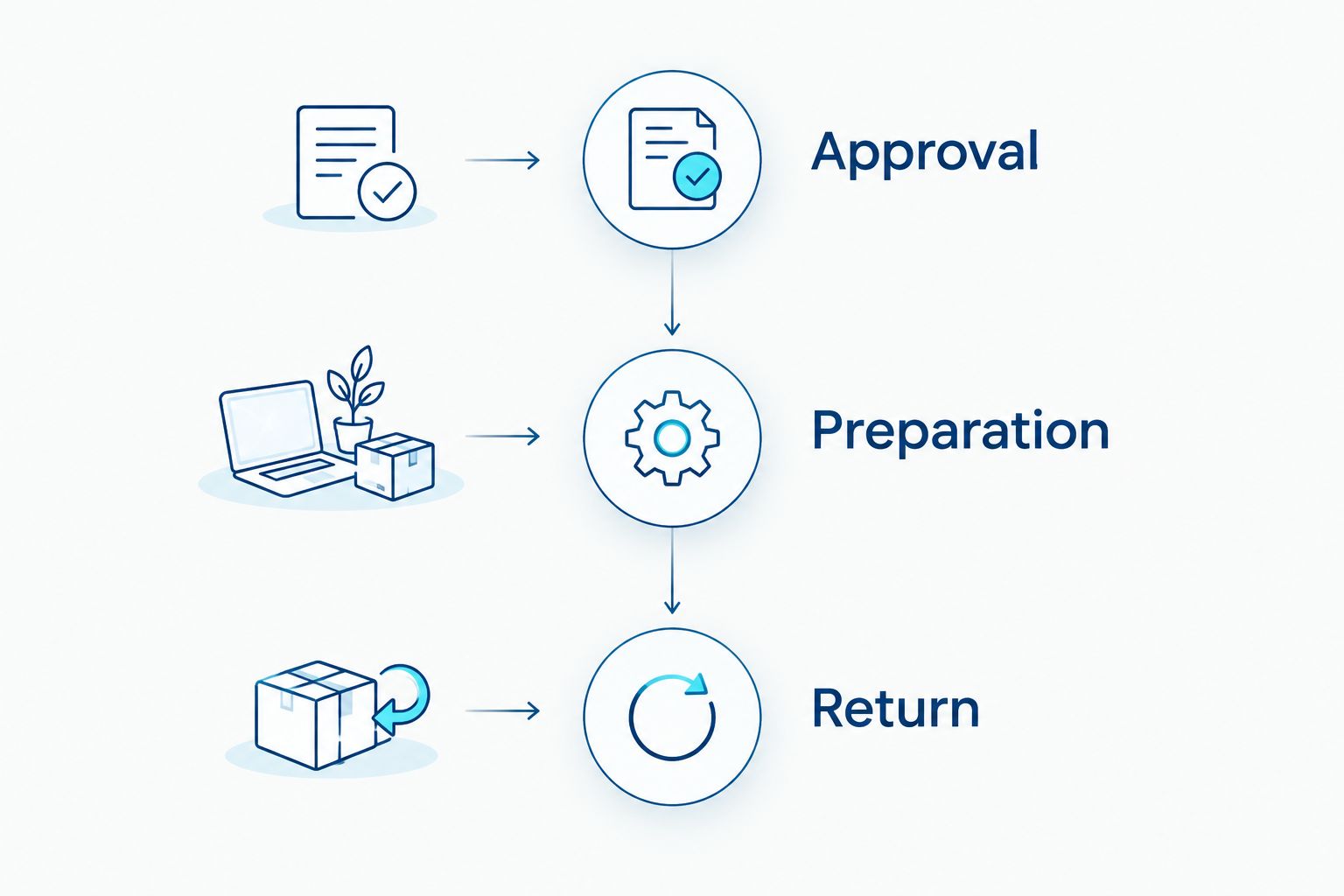
These checkpoints also make provider conversations more useful. Ask about the actual assignment instead of asking only whether someone offers closing services.
Which notary closers should you choose?
For an undecided title team, start with the approved execution method—not a provider ranking. Choose a mobile signing agent for an off-site paper appointment, an approved online notary for remote execution, or an in-house notary for a suitable office signing.
Choose Thecruznetwork when you need Miami-Dade notary and document support, then confirm the closing-specific responsibilities. Add signing coordination when separate appointments require a dedicated logistics owner.
For your 2026 provider instructions, use a short assignment brief: document type, signer location, execution method, required acts, escalation contact, and return process. Those details make the selection actionable.
Discuss your signing assignment
Specify the documents, signer location, execution method, and title-company instructions.
FAQ
What's the best way to choose notary closers in Miami-Dade?
Choose notary closers by title-company approval, assignment scope, and execution method. Confirm document handling, signer readiness, and return instructions before scheduling the appointment.
Is a mobile notary the same as a closing signing agent?
No, mobile notarization does not by itself establish responsibility for a complete closing package. Confirm whether the assignment includes package presentation, required signatures, notarizations, and document return.
Can a Florida online notary handle a real estate closing?
A Florida online notary can perform authorized online notarial acts within an approved transaction workflow. Confirm acceptance of remote execution for the documents and any applicable lender, recording, or recipient requirements.
What does Thecruznetwork offer title-company teams?
Thecruznetwork offers mobile and remote online notary services, apostille certification, certified mail, and signing coordination. Define the closing assignment separately so the provider and title team agree on responsibilities.
Can a notary explain legal terms in closing documents?
A notary commission does not authorize legal advice. Route questions about legal meaning or transaction choices to the authorized title-company contact or appropriate legal professional.
What should I send a notary closer before the appointment?
Send the approved package and written assignment instructions through your approved delivery method. Include signer details, the execution method, required acts, the escalation contact, and document-return instructions.
When should a title company use signing coordination?
Use signing coordination when separate appointments or document handoffs need a dedicated logistics owner. Identify the assigned notaries and keep approval of execution instructions with the title company.
One last thing
Ask this before confirming the appointment: Who receives a document question while the signer is waiting? A named contact and a clear escalation rule are more useful than a general promise to handle everything.
Put that answer in the assignment instructions. The closer should know whom to contact, and the title team should know who owns the response.