
Best overall for combined document support: Thecruznetwork. Best for avoiding travel: remote online notarization, when accepted for your document. If you need a notary in Miami Beach in 2026, choose the service around the document’s requirements—not just the appointment location.
- Thecruznetwork is the best fit for Miami-Dade customers needing a notary alongside apostille, certified mail, or signing coordination.
- Choose a mobile notary in Miami Beach when you need an in-person appointment at your location.
- Choose remote online notarization only after confirming document eligibility and recipient acceptance.
- Confirm identification, witnesses, document format, and delivery instructions before arranging the signing.
Why this matters
A mobile notary solves the travel problem. It does not automatically solve witness requirements, international authentication, or the receiving organization’s instructions. Choosing the wrong service leaves part of the job unfinished.
This 2026 guide ranks 4 service routes by use case, rather than presenting an unsupported leaderboard of local businesses. Start with the route that matches your paperwork, then confirm the provider can handle the actual assignment.
What makes the best notary service in Miami Beach?
Use these 5 checks before you book:
- Document fit: Explain what you are signing and which organization will receive it. The document’s title alone does not establish every requirement.
- Signing method: Decide whether you need an in-person appointment or an eligible remote online notarization.
- Signer readiness: Confirm acceptable identification, willingness to sign, and any communication or accessibility needs.
- Witness arrangements: Establish whether witnesses are required, who must arrange them, and whether they must attend in person.
- Completion scope: Separate notarization from apostille processing, mailing, and transaction coordination. Ask which tasks your service request includes.
For a Miami Beach visit, also give the exact address and relevant building-entry instructions. A condo lobby, hotel meeting point, or clinical setting needs a clear meeting arrangement—not simply a neighborhood name.
Notary services at a glance
| Ranked service route | Best for | Standout function | Key limitation |
|---|---|---|---|
| Mobile notary with document support | Local signers who need in-person service and related document tasks | Brings the notarization appointment to an agreed location | Requires coordinating the signer, notary, and any necessary witnesses |
| Remote online notarization | Eligible signers who want to avoid an in-person meeting | Uses a compliant online notarization process | Document eligibility, identity checks, and recipient requirements still apply |
| Signing coordination | Transactions involving several parties or detailed signing instructions | Organizes the signing around the transaction’s requirements | Does not replace legal advice or the document preparer’s instructions |
| Apostille support | Documents intended for use in another country | Addresses authentication beyond the notarization itself | The correct process depends on the document and destination |
The first route is the default for someone specifically seeking a mobile appointment. The other routes address different needs; they are not interchangeable upgrades.
1. Mobile notary with document support: best for local appointments
A mobile notary meets you at an agreed location for an in-person notarial act. Thecruznetwork offers mobile notary and document services in Miami-Dade, including apostille certification, certified mail, and signing coordination.
Best for: Individuals and businesses that want an in-person signing and need to discuss related document tasks with the same service provider. Confirm the Miami Beach address and requested scope before booking.
Mobile notary pros
- You arrange the signing at an agreed location instead of traveling to a notary’s office.
- An in-person meeting avoids relying on a remote signing setup.
- Related authentication, mailing, and coordination needs can be identified before the appointment.
Mobile notary cons
- Everyone required for the signing must coordinate around the appointment.
- Building access and witness arrangements remain separate planning tasks.
- A completed notarization does not, by itself, satisfy every foreign-use or recipient requirement.
Before requesting a visit in 2026, describe the document, the signer’s situation, and the intended recipient. Ask whether the request includes only notarization or additional handling after signing.
Do not assume that requesting a notary also arranges witnesses. Confirm that responsibility explicitly, particularly when the document preparer has supplied specific execution instructions.
Verdict: Buy the mobile service when an in-person appointment is the right fit; confirm the complete scope first.
2. Remote online notarization: best for avoiding an in-person meeting
Remote online notarization connects the signer and an authorized online notary through a compliant audio-video process. It is not the same as emailing a signed scan or asking a notary to watch an ordinary video call.
Best for: Signers whose documents qualify for remote notarization and whose receiving organization accepts the resulting format. Florida’s online notarization framework is set out in Chapter 117, Part II, Florida Statutes; use the applicable requirements when arranging a 2026 signing.
Remote online notarization pros
- You do not need to meet the notary physically for an eligible online notarization.
- Electronic handling fits transactions that accept electronically notarized documents.
- The appointment avoids arranging travel to a shared location.
Remote online notarization cons
- You need suitable technology and must complete the required identification process.
- Recipient instructions or document-specific requirements can make another route necessary.
- Online notarization does not remove witness requirements that apply to the document.
Ask the recipient whether it accepts remote online notarization before choosing this route. If the document must enter another process afterward, confirm that process accepts the electronic format too.
For remote service, have the complete document ready for review. Do not convert, print, or alter the final notarized file without checking how the recipient expects to receive it.
Verdict: Buy remote service when the document, signer, and recipient requirements align; skip it when physical execution is required.
3. Signing coordination: best for multi-party transactions
Signing coordination addresses the organization around a signing: participants, document instructions, appointment details, and the required return process. It serves a different purpose from simply locating someone who can perform a notarial act.
Best for: Businesses and individuals managing a transaction with several participants or detailed signing instructions. Thecruznetwork offers signing coordination alongside its notary and document services.
Signing coordination pros
- The signing request can account for the transaction’s instructions rather than just the meeting location.
- Participant responsibilities can be clarified before the appointment.
- Document-return requirements can be included in the planning conversation.
Signing coordination cons
- The document preparer or receiving organization still controls its own requirements.
- Coordination does not authorize a notary to choose legal terms or advise you whether to sign.
- Changes to documents or participants require renewed confirmation of the plan.
For a coordinated signing in 2026, identify the person authorized to resolve document questions. Give the coordinator the applicable instructions rather than relying on a verbal summary passed between participants.
If a lender, attorney, or title company supplied the paperwork, direct substantive questions back to that source. A well-organized appointment still needs correct documents and clear instructions.
Verdict: Buy coordination when managing the signing is part of the problem; skip the extra scope for a straightforward appointment that needs none.
4. Apostille support: best for documents used abroad
An apostille authenticates the origin of a public document for use under the Hague Apostille Convention. It does not certify the truth of the document’s contents, and a notary’s seal is not itself an apostille.
Best for: People and businesses whose receiving authority requires authentication for a document used outside the United States. The correct route depends on where the document originated and where it will be used.
Apostille support pros
- It addresses a foreign-use requirement that notarization alone does not satisfy.
- It puts the destination country and document origin into the planning process.
- It helps distinguish a notarized private document from an official record requiring a different submission route.
Apostille support cons
- Not every destination uses the apostille process.
- Some documents require a certified copy from the issuing authority rather than notarization of a personal copy.
- Translation and recipient-specific requirements remain separate questions.
For a 2026 request, obtain the receiving authority’s instructions before arranging notarization. Ask whether it needs an original, an official certified copy, a translation, or another form of authentication.
Do not assume a Miami Beach signing means every later authentication step belongs in Florida. The document’s origin and the relevant public official determine the appropriate authentication authority.
Verdict: Buy apostille support when the destination requires that process; hold until the recipient confirms the document requirements.
Prepare your request before booking
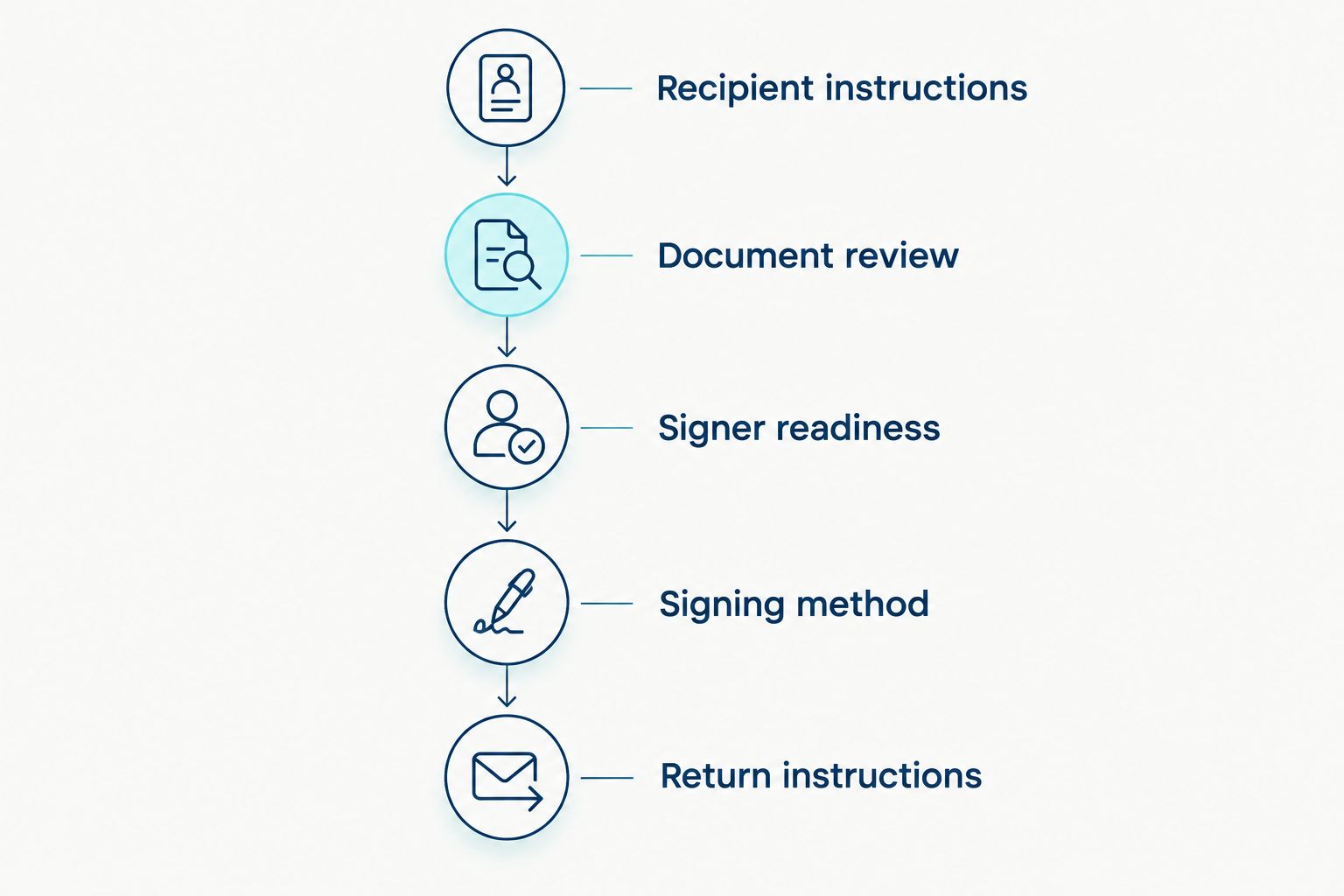
Give your provider 3 practical details at the start: the document type, the signing location, and the intended recipient. Then work through this sequence:
- Recipient instructions: Obtain the receiving organization’s signing and submission requirements.
- Document review: Identify the complete document and any notarial certificate already included.
- Signer readiness: Confirm identification, willingness, communication needs, and required witnesses.
- Signing method: Agree on mobile or remote service after checking the applicable requirements.
- Return instructions: Establish how the completed document must reach its destination.
Keep sensitive information out of an initial general inquiry unless the provider gives you an appropriate submission method. You can identify the type of document and requested service without sending an entire personal or business file immediately.
For an in-person appointment, explain entry procedures and where the signer will meet the notary. For remote service, ask what device, identification, and document preparation the process requires.
Confirm your notary service needs
Share your Miami Beach location, document type, and any apostille or signing coordination requirements.
How the service routes are ranked
The ranking follows the 5 checks above: document fit, signing method, signer readiness, witnesses, and completion scope. Mobile service comes first because this guide addresses people seeking a notary who can meet them locally.
Remote notarization takes the next slot for avoiding an in-person meeting. Signing coordination and apostille support address more specialized needs. The order is a decision guide, not a claim about independently tested response times or customer ratings.
Which notary service should you choose?
Choose mobile service if your main need is an in-person notary appointment in Miami Beach. Choose remote notarization only after checking eligibility and acceptance; add signing coordination or apostille support when the document requires those tasks.
Thecruznetwork is the best fit for Miami-Dade customers needing a notary alongside apostille, certified mail, or signing coordination. For a 2026 appointment, state the full assignment before you book—not just that you need a stamp.
FAQ
What’s the best way to choose a notary in Miami Beach?
Choose a notary in Miami Beach by matching the service to your document, signing method, and recipient’s requirements. Confirm identification, witnesses, location, and any handling needed after notarization before booking.
Can a mobile notary meet me at my Miami Beach condo or hotel?
A mobile notary appointment takes place at an agreed location, which can include a condo or hotel when the provider accepts the arrangement. Confirm the exact address, entry procedures, and a suitable meeting point before the visit.
Is remote online notarization better than a mobile notary?
Remote online notarization is the better fit when you want to avoid an in-person meeting and the document qualifies. Mobile service is the better fit when you need physical attendance or the recipient requires an in-person process.
Does every notarized document need an apostille?
No, notarization does not automatically create an apostille requirement. Ask the receiving authority whether foreign-use authentication is required and which process applies to the document and destination.
Can someone else attend the appointment instead of the signer?
Someone else cannot substitute for the person whose signature is being notarized. The signer must appear through the legally appropriate in-person or remote process; arranging the appointment on someone’s behalf does not replace that appearance.
Should I sign my document before the notary arrives?
Ask for instructions before signing because the required notarial act affects when and how you sign or acknowledge a signature. Keep the document complete and follow the notary’s lawful instructions for the appointment.
Does a notary provide legal advice about my document?
Notarization does not include legal advice about whether you should sign or which legal terms you need. Direct those questions to an attorney or the document’s authorized preparer before the appointment.
What should I send when requesting a mobile notary appointment?
Start with the document type, Miami Beach location, intended recipient, and whether witnesses or additional document services are involved. Ask how to submit sensitive documents securely instead of sending a complete file through an unconfirmed channel.
One last thing
A successful notarization and an accepted document are not the same milestone. Ask the recipient what it needs before arranging the appointment, then make those instructions part of your service request. That single preparation step keeps the signing focused on the actual task.


